MarTech And The Local Business
As a business owner, it’s important to stay up-to-date on the latest marketing technology (MarTech) and how it can benefit your business. In this post, I want to talk about the benefits of improving your MarTech stack, specifically for local businesses.
First, let’s define MarTech. Simply put, it refers to the various tools and software that businesses use to improve their marketing efforts. This can include everything from email marketing platforms and social media management tools to analytics software and CRM systems.
So, what are the benefits of improving your MarTech stack as a local business? One of the biggest benefits is the ability to better target and personalize your marketing efforts. With the right MarTech tools, you can segment your audience and tailor your messaging and marketing campaigns to specific segments. This can lead to higher conversion rates and more customer loyalty.
Another benefit of improving your MarTech stack is the ability to better track and measure the effectiveness of your marketing efforts. With the right analytics tools, you can get a better understanding of what’s working and what’s not, and adjust your strategy accordingly. This can help you save time and money by focusing on the marketing channels and tactics that are delivering the best results.
Another benefit of MarTech is the ability to automate certain marketing tasks, freeing up time and resources for more high-level strategy and creative work. This can be especially beneficial for small businesses that may not have the same resources as larger companies.
In addition, MarTech can help local businesses better connect with and engage with their customers. With tools like social media management and review management, you can more easily respond to customer inquiries and feedback, which can lead to improved customer satisfaction and loyalty.
So, how can you start improving your MarTech stack as a local business? The first step is to assess your current marketing technology and see what’s working and what’s not. This can help you identify any gaps in your stack and areas where you can improve.
Next, do your research and consider the various MarTech options that are available. There are many tools and platforms out there, so it’s important to choose the ones that are the best fit for your business and your marketing goals.
Finally, don’t be afraid to test out new MarTech tools and see how they work for your business. The beauty of MarTech is that it’s constantly evolving, so there are always new tools and platforms to try out. Just make sure to track your results and see what’s working and what’s not. We offer Marketing Technology consulting and implementation for local brands here at Rainmaker Reputation AI CRM.
The benefits of call tracking inbound calls and how it can benefit your business.
First, let’s define call tracking. Simply put, it’s the process of using a unique phone number or tracking code to identify the source of inbound calls to your business. This can include calls from your website, calls from online directories or listings, and calls from ads or other marketing efforts.
So, what are the benefits of call tracking inbound calls for a local business? One of the biggest benefits is the ability to track the ROI of your marketing efforts. With call tracking, you can see which marketing channels and tactics are driving the most calls and revenue for your business. This can help you understand what’s working and what’s not, and adjust your strategy accordingly.
Another benefit of call tracking is the ability to better understand your customers and their needs. By tracking the calls that come in to your business, you can get a better understanding of what your customers are looking for and how they found your business. This can help you tailor your marketing efforts and better meet the needs of your customers.
In addition, call tracking can help you identify opportunities for improvement in your customer service. By tracking calls and analyzing the call data, you can identify patterns and trends that may indicate areas for improvement in your customer service. This can help you better serve your customers and build their loyalty to your business.
So, how can you start using call tracking for your local business? The first step is to choose a call tracking platform that meets the needs of your business. There are many options available, so it’s important to do your research and choose a platform that fits your budget and provides the features you need. We offer a platform that can handle all your call tracking and call attribution needs. It’s just one of the many benefits offered in the entire suite.
By the way… did you know Google Business Profiles, offered by Google, now allow for Call Tracking from any local business’s Google Business Profile. It’s THAT important. We can help you with this important new feature if you have not enabled it yet. Reach out to us via our Webchat.
Next, set up your call tracking system and start tracking your calls. This will typically involve creating unique phone numbers or tracking codes for different marketing channels or campaigns. Make sure to track as much data as possible, including the source of the call, the duration of the call, and any notes about the call.
Finally, analyze the data you collect and use it to inform your marketing strategy. Look for patterns and trends that can help you better understand your customers and optimize your marketing efforts.
In conclusion, call tracking inbound calls can be a valuable tool for local businesses looking to track the effectiveness of their marketing efforts and better understand their customers. By choosing the right call tracking platform, setting up your system, and analyzing the data you collect, you can drive better results for your business and build customer loyalty. So, it is a great tool to have in your marketing stack.
In conclusion,
improving your MarTech stack as a local business can have a number of benefits, including better targeting and personalization, improved tracking and measurement, automation of certain marketing tasks, and better engagement with customers. By assessing your current stack, doing your research, and being willing to test out new tools, you can take your marketing efforts to the next level and drive better results for your business.
Mobile App Custom Fields (2026) — Rainmaker Reputation
Mobile App Custom Fields: Five Field Types That Stop Bad Data at the Door
Let me tell you what's really going on here: most bad follow-up is not a lazy team. It is bad data, typed into a plain text field, on a phone, in a parking lot. We've just added advanced mobile app custom fields to Rainmaker Reputation CRM: five new field types for contacts and opportunities that format and validate what your team captures, right where they capture it.
What are advanced mobile app custom fields?
Advanced mobile app custom fields are five new field types the mobile app now fully supports: URL, Date & Time, Time, User, and Rich Text. They replace plain text workarounds for data that was never plain text to begin with.
A website address becomes a clickable URL, not a mangled string. A team member becomes a real User assignment, with an avatar, not a misspelled name. Notes keep their rich text formatting — bolding and lists included.
Why does plain text on mobile cost you money?
It costs you because plain text accepts anything, including the mistake. The old way forced three leaks on every business whose team works away from a desk:
- 1. Broken links. A URL typed wrong is a dead end — for your team, and for the follow-up that was supposed to happen from it.
- 2. Wrong times and dates. No format, no limits, no working-day restriction. One bad entry and the scheduling built on top of it is wrong too.
- 3. Names nobody can find later. Misspell a team member's name in a text field and that contact might as well belong to nobody in your marketing technology for local business.
A plain text field will accept anything — including the mistake that costs you the job. Systems over people, period. Build the rule into the field and you stop depending on tired humans remembering it at 6 p.m. in the field.
What validation rules work on the mobile app?
The validation rules you configure on the web work on mobile too: the app enforces them and shows errors when an entry breaks them. Block unapproved domains in a URL field. Restrict a date field to working days. Hold times inside the ranges you set.
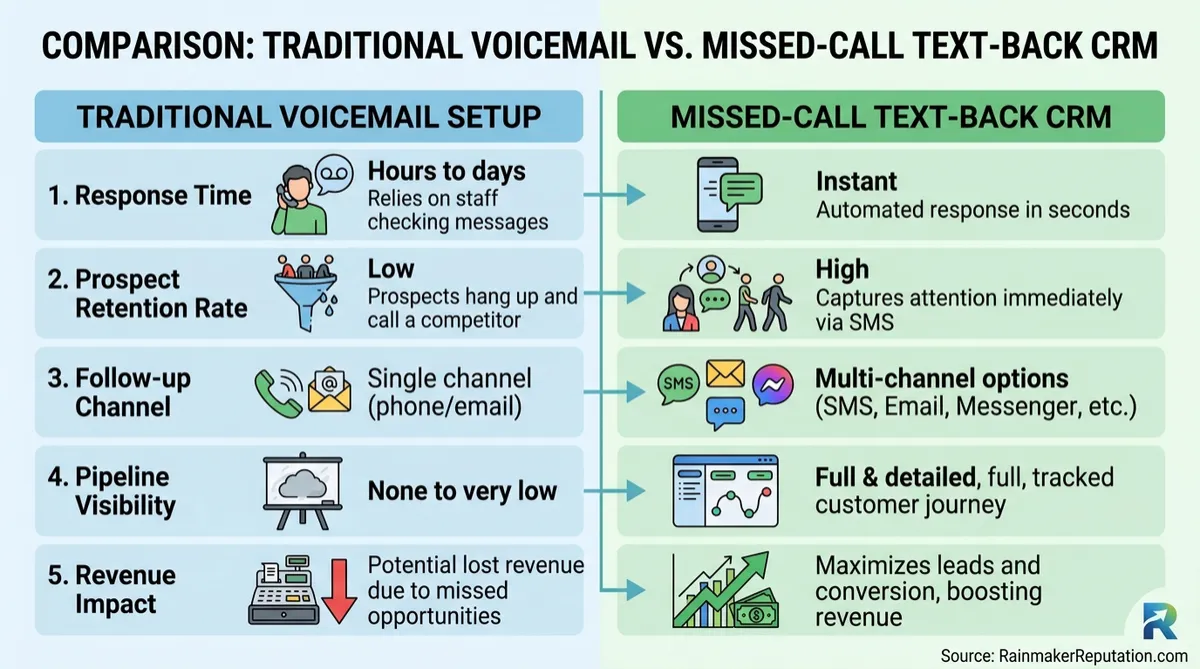
That consistency is the point: a CRM designed for client retention cannot run on contacts your team cannot trust. Desk or phone, all-in-one inbox or field, the standard stays the same.
Who is this best for — and who should skip it?
Best for: owners, consultants, and creators whose teams capture contact and opportunity data on phones — in the field, between appointments. It removes a daily source of cleanup work and strengthens the data your marketing automation runs on.
NOT for: a desk-only operation that rarely opens the mobile app — plain fields are not hurting you yet. The trade-off: validation only works if you configure it on the web first, and rules set too tight will block legitimate entries. Configure one field, test it, then expand.
How do you set it up on Monday morning?
- Open custom field settings on the web and add a URL, Date & Time, Time, User, or Rich Text field to your contacts or opportunities.
- Configure the validation rules for that field — approved domains, working days, time ranges — and save.
- Open a contact or opportunity in the mobile app and tap the new field.
- Enter the data. The app enforces your validation and shows an error if the entry breaks a rule.
- Repeat for the one field your team mangles most often next — do not rebuild everything at once.
Your team is not careless. Your fields were. Your challenge: before Friday, convert the single most-abused plain text field on your contacts into its proper type, set one validation rule, and watch the cleanup work disappear.
P.S. Clean data compounds: every clickable link and correct date is one less missed follow-up. Garbage in was never a people problem. It was a field problem — and fields can be fixed.

FEATURES
Social Media Management
AI Agents
Search Optimization A.I. Agent
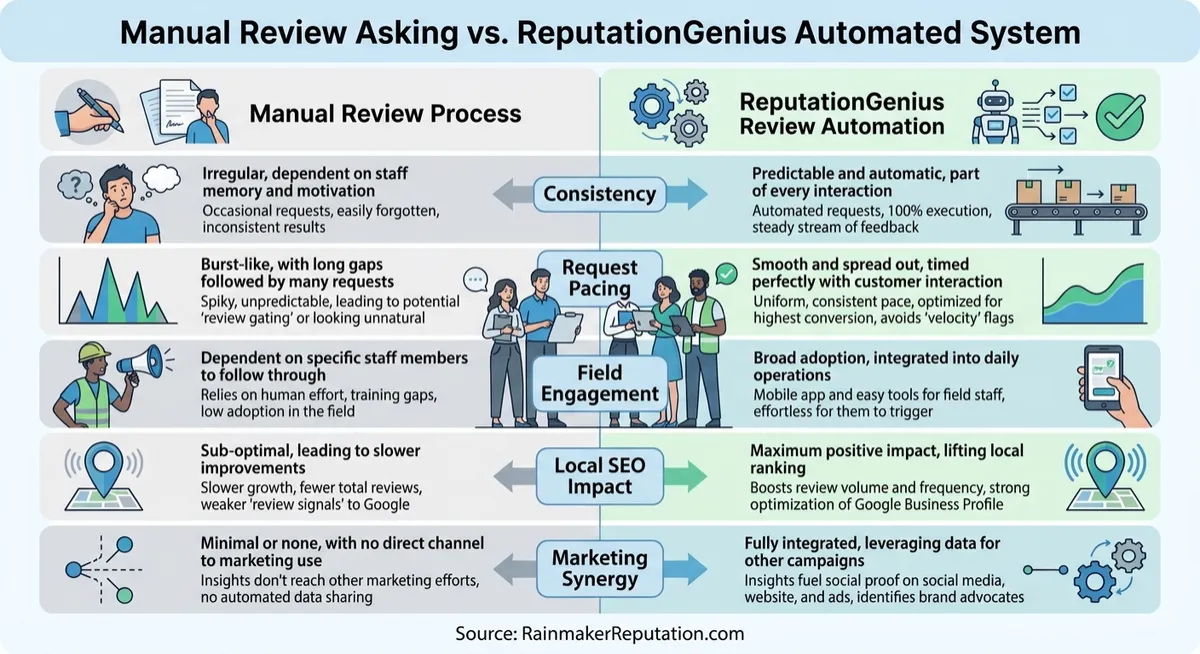
Review Collecting Systems
Forms & Surveys
Online Appointment Booking
Membership & Course Builder
Automated Nurture Sequence
Email & SMS
Phone System & Autodialer
Learn More

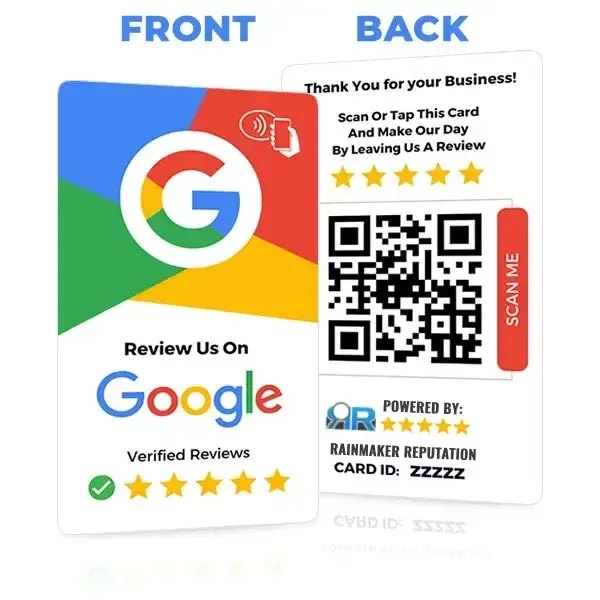


Rainmaker Reputation AI CRM is a CRM & AI Automation suite that helps Local Brands, Business Coaches & Content Creators solve the problem of how to properly connect with prospects & customers in order to build profitable momentum & growth through getting their businesses more reviews, better reputations in their markets, & automated simplified CRM processes.